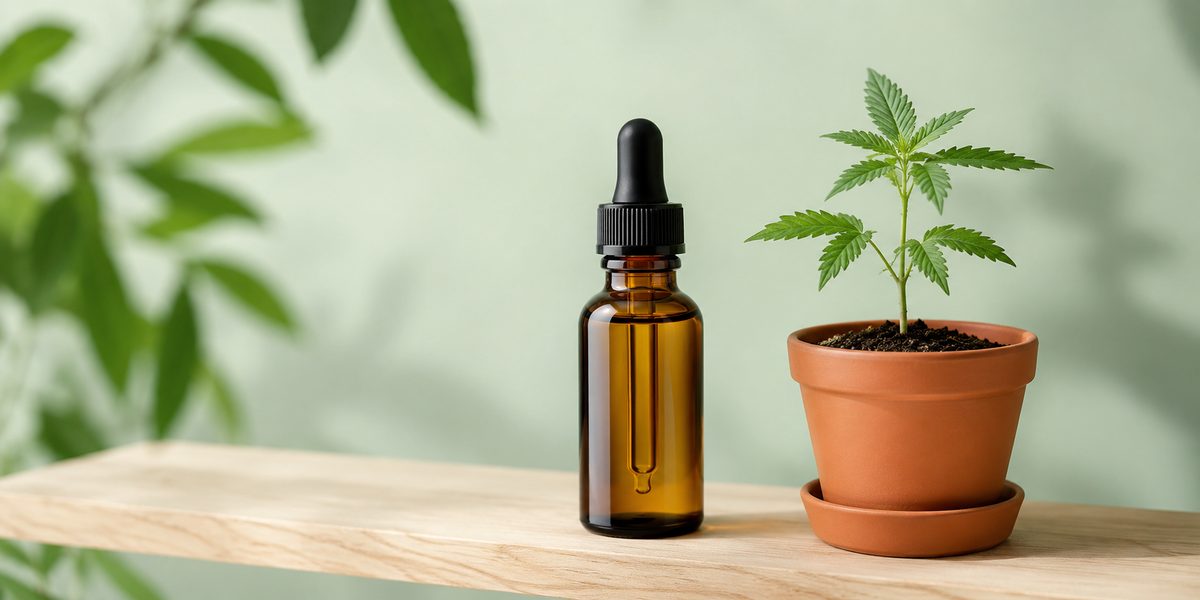
What Are CBD and THC?
CBD and THC are natural compounds found in the cannabis plant. They're called cannabinoids, and your body actually has a built-in system designed to interact with them — it's called the endocannabinoid system (ECS).
CBD (cannabidiol) does not make you high. People use it for anxiety, sleep, pain, and general wellness. It's legal in all 50 states when derived from hemp.
THC (tetrahydrocannabinol) is the compound that makes you high. It's used both recreationally and medically for pain, nausea, and appetite. Its legality depends on your state.
That's really all you need to know to get started. For the deep dive, read our complete CBD vs THC guide.
Is It Safe?
CBD has an excellent safety profile. The World Health Organization has stated that CBD is generally well-tolerated and has a good safety profile. Side effects are mild and uncommon — mostly drowsiness, dry mouth, and occasional digestive upset.
THC is also physically safe in normal doses, but it impairs judgment and coordination (don't drive), and can cause anxiety or paranoia, especially at higher doses or for people prone to anxiety. It's not recommended for people with a personal or family history of psychosis.
Both CBD and THC can interact with certain medications, particularly blood thinners and anti-seizure drugs. If you take prescription medications, talk to your doctor before starting any cannabinoid supplement.
What Should I Try First?
If you've never tried any cannabinoid before, CBD gummies are the easiest starting point. Here's why:
- Pre-dosed — each gummy has a specific mg amount, so there's no measuring
- Non-intoxicating — you won't get high or feel impaired
- Long-lasting — effects last 4–6 hours
- Widely available — legal in all 50 states, easy to order online
- Discreet — they look and taste like regular gummy vitamins
Start with a 10–15mg gummy. Take it with food (CBD absorbs better with fat). Wait at least 60–90 minutes before deciding if you need more. Most beginners find their effective dose within the first week.
Get a Personalized Dose
Our dosage calculator factors in your weight, experience, and goals.
Calculate My Dose →Will It Show on a Drug Test?
This is the #1 concern for beginners, and the answer depends on the product type:
- CBD Isolate: Pure CBD, zero THC. Should not trigger a test. Safest option.
- Broad-Spectrum CBD: Contains other cannabinoids but THC has been removed. Very low risk.
- Full-Spectrum CBD: Contains up to 0.3% THC. At high daily doses, can accumulate enough THC metabolites to trigger a positive. Risky if you're tested.
- Any THC product: Delta-8, delta-9, THCA — all will cause a positive result.
If you're subject to drug testing: Only use CBD isolate or verified broad-spectrum products from brands that publish full panel lab reports. Don't guess.
Is It Legal Where I Live?
Hemp-derived CBD is legal at the federal level across all 50 states under the 2018 Farm Bill. However, THC legality varies dramatically by state — some allow recreational use, others medical only, and some ban it entirely. Delta-8 THC is in a legal gray area, with over 20 states having banned or restricted it.
Check your state's specific laws using our interactive legality map before purchasing any THC product.
How Do I Know If a Product Is Good?
The CBD/THC market has minimal regulation, so quality varies wildly. Here's how to avoid wasting money on bad products:
- Check for third-party lab reports (COAs). Every reputable brand publishes these. They verify the CBD/THC content matches the label and confirm the product is free of contaminants. If a brand doesn't have lab reports, don't buy from them.
- Look for U.S.-grown hemp. Hemp grown under the U.S. Farm Bill is subject to testing requirements that imported hemp isn't.
- Compare price per milligram, not price per bottle. A $30 bottle with 300mg of CBD costs $0.10/mg. A $50 bottle with 1500mg costs $0.03/mg. The expensive bottle is actually cheaper per dose.
- Read our reviews. We've already done this analysis for you. Every product we recommend has been vetted for lab verification, ingredient quality, and real value.
Your Next Steps
CBD vs THC Guide
Deep dive into the differences
Best CBD Gummies
Our top picks for beginners
Dosage Calculator
Get your personalized dose
Legality Map
Check your state's laws
Frequently Asked Questions
Medical Disclaimer: This content is for educational purposes only and is not medical advice. Consult a healthcare provider before starting any cannabinoid supplement.